
 Back to all updates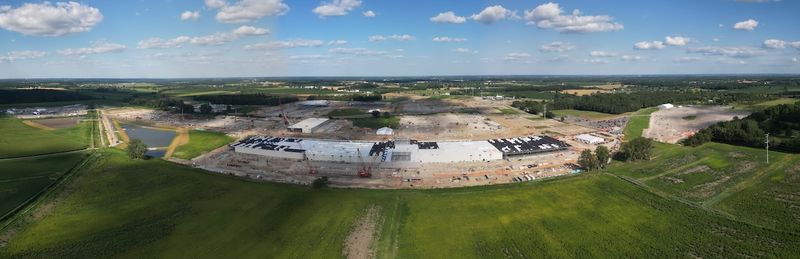
Published on7/28/2026
Can incandescent rage power data centers? Those of us in Saline are about to find out
Last week at an Environmental Protection Agency event, President Trump met with state governors and electric companies to promote a Ratepayer Protection Pledge. The entirely-voluntary pledge stated that companies would control energy costs for residents if a data center was built in their community. This promise is pure theater and a “pinky-promise”—there is no oversight or accountability attached to the pledge.
But between promises, the President revealed his real views about data centers. “You have to convince your community,” Trump said. “You can’t fight it. You have to go with it.” It should be noted that the Trump family has personal financial stake in data centers, including holdings in operations, hardware, and power and cooling infrastructure.
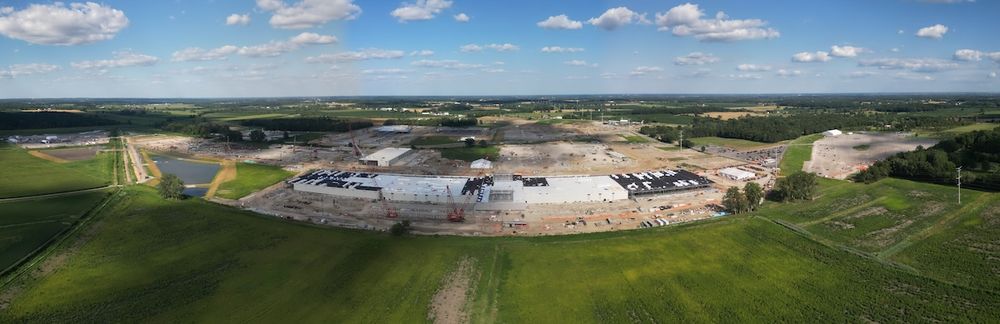
In Saline Township, the “convincing” campaign has been profound and insidious. Our community was targeted as the latest Oracle data center for OpenAI. The mega, hyperscale data center soon became “The Barn,” a cutesy moniker that conjures images of the farm fields where it will sit. In reality, the approximately 1000-acre site is barren, with now-bulldozed fields that toes dangerously close to the Saline River and adjacent natural areas.
We did not, and still do not want, this data center. We said it over and over again, in town council meetings, protests, letters to representatives, and meetings with government officials and lawyers. We continue to demand transparency, searching for details and explanations on how the company will follow through on the many environmental and economic promises they’ve touted. Our pleas have been downplayed and more often, ignored.
In fact, at the June 1 Construction Celebration event on-site, Governor Whitmer told Oracle’s CEO that Michigan is open to big tech and future data centers, regardless of what communities think. “We’re used to people saying f*** no and doing it anyway,” Whitmer quipped.
The promises and the reassurances that these companies will help our communities has been relentless. Saline is a poster child for these tactics, and our community has been courted in insidious ways. Donations—or more accurately, bribes— have been dangled, promising school and fire department funding, along with community project funding like the $10 million pledge to the Saline Rec Center. To date, none of these promises have progressed into a completed, signed agreement or defined timelines.
On The Barn website, Oracle promises “significant tax benefits” stemming from the data center as well as a promise that energy rates will not go up for residents. Yet, disturbing developments have trickled out over the past months, hacking away at these promises.
The data center will use 1.4 gigawatts of power, the equivalent of powering 100,000 homes. The Barn website clearly states that Oracle/OpenAI will pay “100% of the energy and infrastructure costs associated with the project.” And yet, in April, DTE Energy asked the Michigan Public Service Commission to approve $474.3 million increase in annual electrical revenue that would raise residential rates by 9.7%. DTE insists that they could pause the hike if the Oracle data center comes online by 2027. Michigan’s Attorney General Dana Nessel called their offer “a ransom note” and it certainly sounds that way to us.
Oracle also just successfully slashed their tax bill in half, cutting $147 million each year for the next 12 years. Citizens Research Council researchers note that tech companies that can afford to develop hyperscale data centers can easily afford the full tax rates. We agree—Oracle’s request for tax relief is salt in the wound, especially for a center valued at $56 billion.
Oracle promised that the data center will be a job boon for Saline, creating more than 2,500 union construction jobs and about 450 on-site jobs. But these construction jobs are temporary, filled by transient workers who move from one data center to the next. As for the permanent jobs, it is unclear what the breakdown between high-tech jobs and lower-paid positions like security and maintenance will be. Some experts note job numbers at data centers are overstated, and only several dozen employees are needed.
Beyond these economic concerns, the potential environmental impacts of a 1000-acre, hyperscale data center are breathtaking. While the company says that 75% of the data center site will be preserved as open space, farmlands and wetlands, a simple drive by the site shows the site was leveled by bulldozers, cleared of all vegetation and natural lands. The steady stream of double-load gravel trucks through Saline also suggests a lot of material was moved on and off the site. Our inquiries into the construction and well permits have been difficult to uncover, and some will require FOIA requests.
Oracle says Saline Township’s data center will be a closed-loop cooling system, which is a less water-intensive method than evaporative cooling processes. But how much less water will be needed? It’s unclear, as tech companies are cagy about details, citing proprietary tech. Google alone reports wide ranges of annual water usage at its data centers. In 2024, the lowest water use for Google’s data centers came from the air-cooled data center in Pflugerville, Texas at 10,000 gallons, and the highest site in Council Bluffs, Iowa consuming a jaw-dropping 1 billion gallons of water.
We don’t know how much water will be removed and consumed from the Saline area aquifers, but we do know that the closed-loop system will require more energy to operate. And energy creation also requires water—in 2024, Meta consumed 19 billion gallons of water to produce the energy needed to power data centers. That was 23 times the water used directly for cooling systems and building use. This “indirect” water use for energy is often not the number that tech companies report using for operating data centers.
Not only is water use an issue, now wastewater disposal became a big concern. On July 23, Related Digital (the company that financed the data center for Oracle) filed for a permit to authorize an increase in wastewater pollutant levels they release into the Saline River. Details about the type and amount of pollutants is missing from the public notice. This is a disturbing new development, and we dread what other environmental surprises will unfold.
The Barn’s water system suddenly seems more open than closed.
Operating a hyperscale data center also creates light and noise pollution, and the constant cacophony can be profound. In Dowagiac, Michigan, residents near the hyperscale data center say the noise is like someone setting up a vacuum in your living room, with high pitched whining inundating their homes 24/7, even with the windows shut.
This persistent data center noise can adversely affect nearby communities and local wildlife. Residents in Loudon Country, Virginia who live within several miles of data centers reported disruptions in sleep, headaches, and a general decrease in quality of life from both low and high-pitched noise. On The Barn’s website, the only mention of noise limits was a line noting that equipment will be designed to produce a max of 55 decibels at the property line. No details of noise monitoring is mentioned, and it is unclear if that noise is from backup generators or daily operations.
These are only a fraction of our unanswered questions and concerns. From the first inklings of the Saline data center, our community has been bullied by elitists, advised by the compromised and the incompetent, and our profound opposition repeatedly ignored. Given the secrecy and vagueness surrounding the planning, construction, and operation of the hyperscale data center, we have no confidence in timely and accurate monitoring or reporting of any environmental issues. We do not trust tech companies like Oracle, nor do we believe that the current governmental constraints will protect our community.
We demand a moratorium on data center construction. It is imperative that transparency be forefront of all discussions, and continued monitoring and reporting of activities be available to the public. There must be clear consequences for lying and failure to meet promises and regulations must be put in place to protect our communities and environment.
But based on our experiences, and the lack of governmental action to hold these companies accountable, we are warning all Americans about the damage big tech can bring to your home.
Saline was bullied and lied to about data centers — and your town is next.
Data Center Gallery
Saline Township, MI